

12'2"x9'


Overview
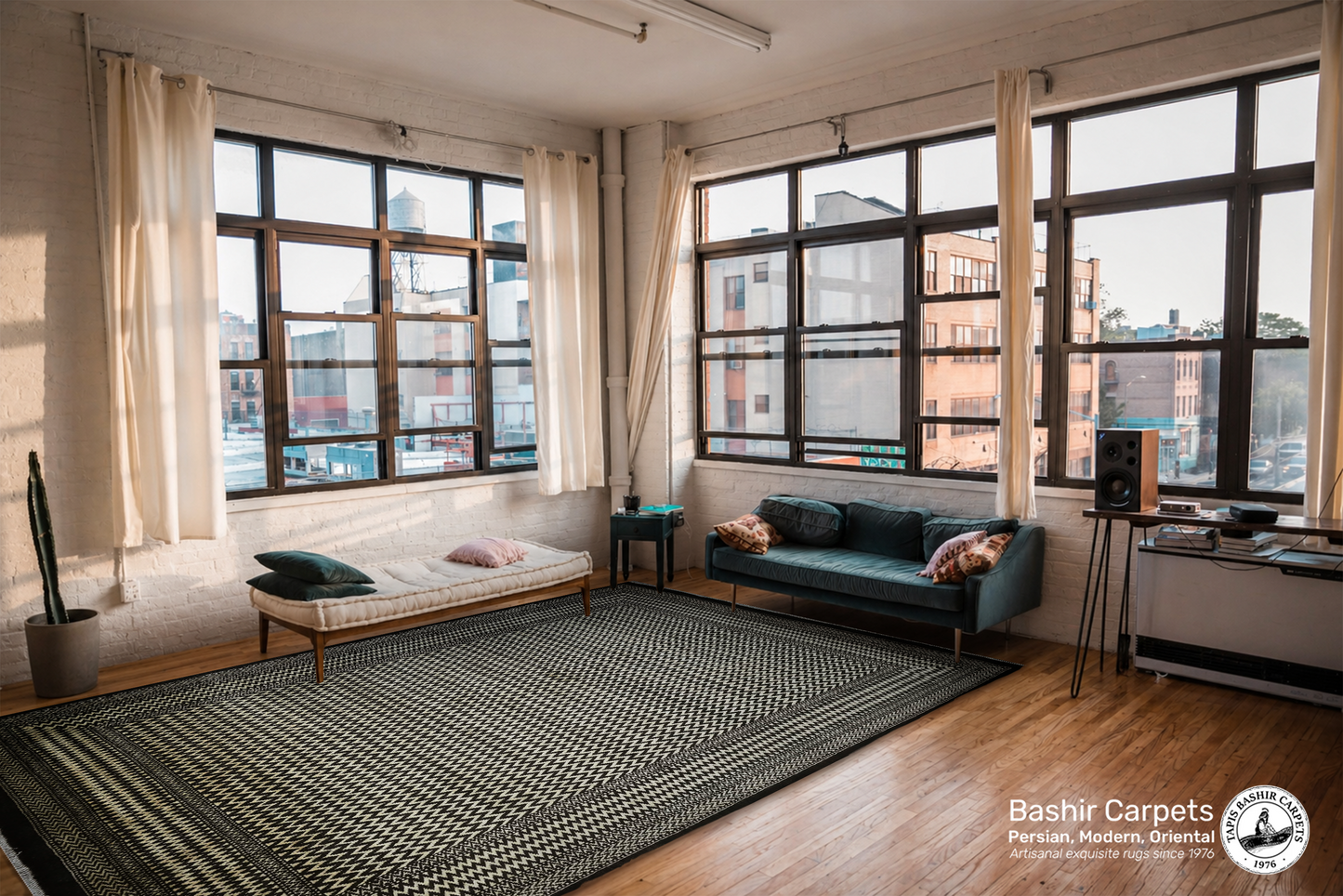
Rehaussez votre espace avec le tapis Cordoba. Inspiré par les motifs complexes des carreaux mauresques d'Andalousie, ce tapis présente un motif mosaïque marocain noir et ivoire hypnotisant, rappelant les carreaux émaillés taillés à la main que l'on trouve dans les palais et les mosquées historiques.
Les motifs alternés ivoire et noir cobalt profond créent un contraste audacieux et intemporel, faisant de ce tapis un ajout polyvalent aux intérieurs modernes et traditionnels. Doux sous les pieds mais exceptionnellement durable, le tapis Cordoba est conçu pour résister à une utilisation quotidienne tout en ajoutant une touche de sophistication à votre maison.
Parfait pour les salons, les salles à manger et les chambres à coucher, ce tapis rend hommage à la ville de Cordoue, en Espagne, un carrefour culturel où l'art islamique et européen a prospéré pendant plus de 800 ans. Ajoutez une touche d'histoire, d'artisanat et de beauté intemporelle à votre espace avec ce magnifique tapis en laine noué à la main.
Tapis en laine noué à la main Cordoba – Élégance monochrome d'inspiration mauresque
 Cordoue est une ville située dans le centre-sud de l'Espagne et imprégnée de plus de 2 000 ans d'histoire riche : les Romains, les Wisigoths, les Juifs, les Maures, puis les Espagnols ont tous laissé leur empreinte distincte sur Cordoue, en faisant l'une des villes les plus intéressantes d'Espagne.
Ce très beau tapis en laine est noué à la main en pure laine et représente l'influence des Maures en Espagne. Certains des palais construits en Espagne par les Maures entre le VIIIe et le XIe siècle affichent ce motif sur leurs murs intérieurs. Ce motif peut être observé sur les murs carrelés du palais royal de l'Alhambra, de la forteresse de Grenade et du palais de l'Alcazar de Séville, à l'origine une forteresse maure.
Sources et inspiration : Bérinstain, Valérie, et al. L'art du tapis dans le monde. Paris : Mengès, 1996. Imprimé. ; Jerrehian Jr., Aram K.A. Oriental Rug Primer. Philadelphie : Running Press, 1980. Imprimé. ; Herbert, Janice Summers. Oriental Rugs, New York : Macmillan, 1982. Imprimé. ; Hackmack, Adolf. Chinese Carpets and Rugs, Rutland et Tokyo : Tuttle, 1980. Imprimé. ; De Moubray, Amicia, et David Black. Carpets for the home, Londres : Laurence King Publishing, 1999. Imprimé. ; Jacobsen, Charles. Oriental Rugs A Complete Guide, Rutland et Tokyo : Tuttle, 1962. Imprimé. ; Bashir, S. (s.d.). Entretien personnel. ; Les sources de sites Web et les dates de consultation varient (à confirmer). Sans préjudice de l'usage officiel.
- Le choix d'une sélection entraîne l'actualisation de la page entière.
- S'ouvre dans une nouvelle fenêtre.